


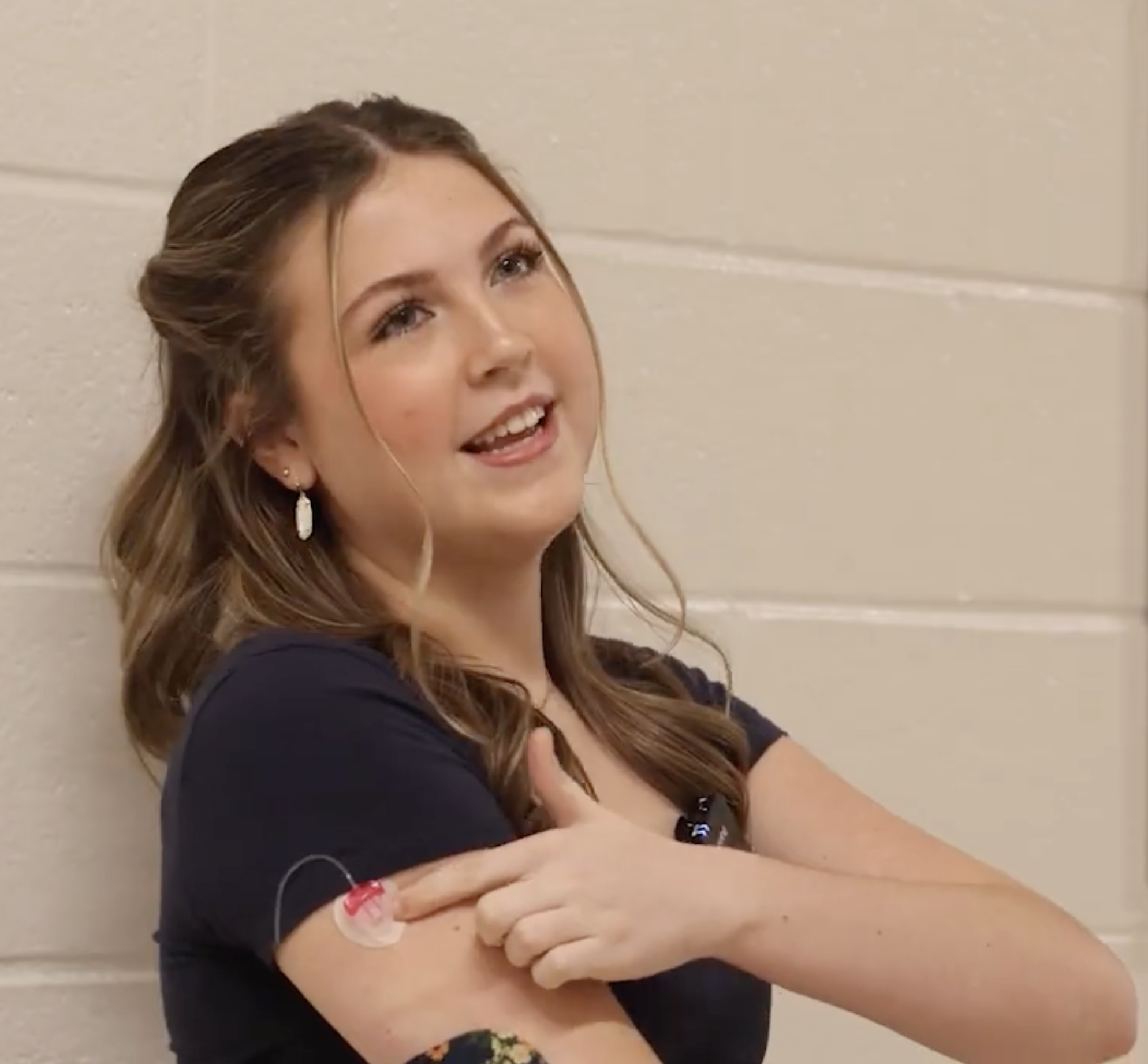
As communities around the world observed World Diabetes Day on Nov. 14, a Wakeland High School student used the moment to share her personal experience living with Type 1 diabetes and to clear up common misconceptions about the condition.
Katelyn White, a theater student at Wakeland, was diagnosed with Type 1 diabetes at age 3. She said many people misunderstand the realities of the disease, often confusing it with Type 2 diabetes or assuming it results from lifestyle choices.
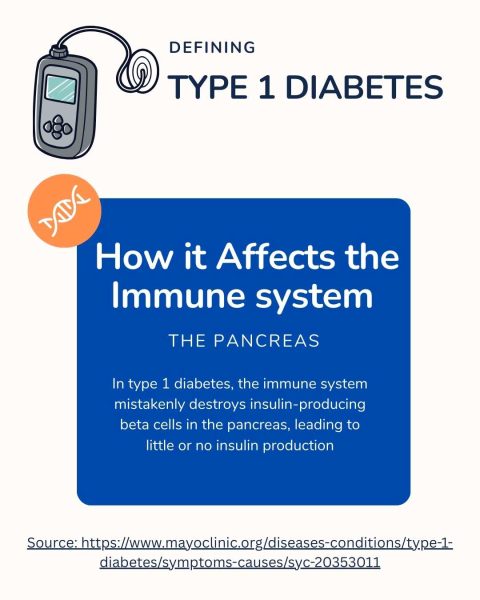
“There are a lot of misconceptions,” she said. “People think diabetics can’t eat sugar, or that we got it from being unhealthy,” she said. “That’s not the case. My immune system attacked my pancreas, and now I’m Type 1 diabetic. There’s no cure right now, but they’re working on it.”
Type 1 diabetes requires constant monitoring. Katelyn uses multiple medical devices to track and regulate her blood sugar levels. She said the condition adds a significant mental and physical load to her daily life.
“Diabetics make about 120 more decisions a day,” she said.
“Simple things like, ‘Should I eat this right now?’ or ‘Will this make my blood sugar high or low?’ I have to change one device every 10 days and the other every three days for the rest
of my life.”
Despite the challenges, Katelyn continues to stay active in the fine arts. She performs in theater productions and participates fully in campus life.
“Stress can affect blood sugar, too,” she said. “But, diabetes doesn’t stop me from doing the things I love.”
“[…]diabetes doesn’t stop me from doing the things I love.”
World Diabetes Day is observed annually to raise awareness about diabetes and promote understanding of those living with the condition.
Living with diabetes has also shaped how Katelyn thinks about other chronic health conditions that are often misunderstood. As a journalism student, Katelyn recently wrote about postural orthostatic tachycardia syndrome, or POTS, highlighting how invisible illnesses affect daily life and why empathy matters for people whose conditions others cannot immediately see or understand.
That perspective, she said, comes from years of managing a condition people often misunderstand.
“You have to learn to work with your body, and it will work with you,” she said. “Give yourself some grace.”
Katelyn’s full story about POTS and invisible illness can be read here.
